Introduction
Assisted living is no longer just about providing a safe room and medical support for seniors. With changing family structures, longer life expectancy, and urban lifestyles, families increasingly look for communities that can provide holistic care, comfort, and dignity for their loved ones. The modern assisted living facility is designed not just as a care centre but as a place where residents can live meaningfully supported by the right amenities and a community environment.
From health services to spaces that foster social interaction, the amenities offered can make a huge difference in a senior’s quality of life. Let’s explore, in detail, the key amenities in assisted living facilities and how families can choose the right combination for their needs.
1. Care and Health Services
At the heart of assisted living is personalized health and caregiving support. In India, where many seniors live with chronic conditions such as diabetes, hypertension, or mobility issues, health services are central to a good facility.
Common health services include:
- Specialized care units for condition-specific patients such as dementia (memory care), Alzheimer’s, or palliative care for terminal illnesses.
- 24/7 caregiver support for activities of daily living (ADLs) – mobility, bathing, dressing, toileting.
- Medication management with timely reminders and monitoring.
- On-site nurses or visiting doctors for routine check-ups.
- Emergency care protocols, including tie-ups with nearby hospitals and ambulance availability.
- Physiotherapy and rehabilitation services for post-surgery recovery or mobility support.
- Regular health screenings (BP, sugar levels, cardiac health).
How to choose wisely: Check whether the facility has qualified medical staff on payroll (not just visiting), partnerships with hospitals, and a clear emergency response system.
2. Living and Accommodation
Comfortable living spaces are central to making seniors feel at home. Unlike old-age homes of the past, today’s assisted living facilities emphasize privacy, dignity, and safety.
Typical room features include:
- Private or shared rooms with attached bathrooms.
- Safety features like grab bars, non-slip flooring, night lights, and wheelchair access.
- Furnished spaces with beds, wardrobes, air-conditioning, and sometimes kitchenettes.
- Housekeeping and laundry services so residents don’t have to worry about chores.
- Maintenance support for electrical and plumbing needs.
How to choose wisely: Visit in person. Check ventilation, natural light, cleanliness, and whether the rooms feel warm and homely rather than sterile or hospital-like.
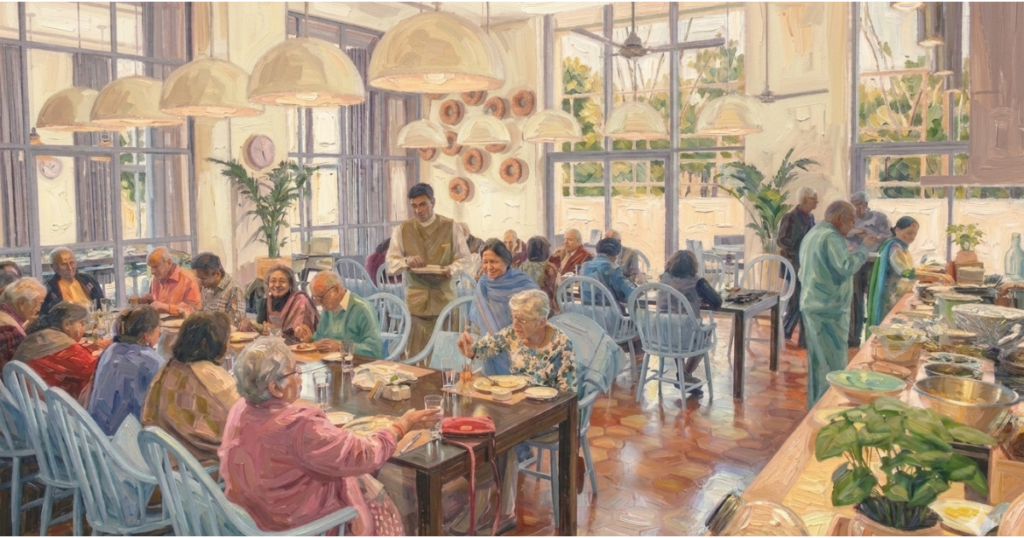
3. Dining and Nutrition
Food is deeply cultural and plays a huge role in seniors’ comfort. Assisted living facilities understand that meals must be nutritious, tasty, and sensitive to dietary preferences.
Dining amenities usually include:
- Three balanced meals and snacks, prepared fresh daily.
- Dietary customization for conditions like diabetes, low-salt, or renal diets.
- Vegetarian or non-vegetarian options, with many communities offering purely vegetarian kitchens.
- Dining halls that encourage social interaction or in-room dining for those who prefer privacy.
How to choose wisely: Ask to see a weekly menu, sample a meal if possible, and check if the facility accommodates cultural food habits (like Jain meals or South Indian vegetarian food).
4. Community and Recreational Amenities
A good assisted living facility is more than just medical care, it creates opportunities for residents to remain active, engaged, and socially connected.
Typical community amenities include:
- Lounges and libraries for reading or group discussions.
- Gardens and walking tracks for fresh air and exercise.
- Fitness rooms or yoga halls for physical wellness.
- Recreational areas for games like carrom, chess, and cards.
- Cultural and festival celebrations, keeping residents connected to Indian traditions.
- Workshops and hobby clubs such as music, art, or gardening.
Many facilities also have prayer or meditation rooms where residents can practice daily worship whether it’s a temple corner, meditation space, or even multi-faith prayer halls.
How to choose wisely: Look for communities that balance structured activities with free time.
5. Safety and Security
For families, knowing that their loved one is safe brings peace of mind. Assisted living communities focus heavily on round-the-clock security.
Safety and security measures typically include:
- CCTV surveillance in common areas.
- Secured entry and exit points with visitor logs.
- Fire alarms, extinguishers, and evacuation drills.
- Emergency call systems in rooms and bathrooms.
- Trained staff in first aid and CPR.
Some facilities also use tech-enabled monitoring systems, allowing families to check updates through apps.
How to choose wisely: Ensure safety measures are actively monitored, not just installed. Ask about staff-to-resident ratio at night.
6. Transport and Accessibility
Accessibility is essential for seniors, especially those with mobility challenges.
Transport and accessibility features include:
- Wheelchair-friendly buildings with ramps, elevators, and wide corridors.
- Transport services for hospital visits, market trips, or social outings.
- Proximity to hospitals for quick medical access.
- Easy access to community areas within the facility without steep climbs or obstacles.
How to choose wisely: Check how transport is arranged, is it on-demand or fixed schedule? For seniors needing frequent check-ups, proximity to a reputed hospital is crucial.
7. Specialized Support Services
Many seniors need support beyond daily caregiving. Advanced assisted living facilities are now offering specialized services:
- Memory care units for residents with dementia or Alzheimer’s.
- Respite care for short-term stays (helpful when families are traveling).
- Palliative care for comfort in serious illnesses.
- Counseling and emotional support, including mental health check-ins.
How to choose wisely: If your loved one has a chronic illness, ask how the facility manages such cases and whether staff are trained in condition-specific care.
8. Cultural and Family-Oriented Spaces
Unlike Western models, Indian assisted living strongly values family ties and cultural continuity. Facilities increasingly offer:
- Spaces for family visits, including guest rooms.
- Celebration of festivals like Diwali, Holi, or Eid.
- Prayer and meditation areas, often with idols, lamps, and bhajan sessions.
- Community halls for group gatherings, satsangs, or kirtans.
How to choose wisely: Ask about family visitation policies, guest stays, and how festivals are celebrated.
Summary
Choosing an assisted living facility is not just about checking for medical care or room quality. It’s about finding a balance between safety, healthcare, comfort, and emotional well-being.
The right amenities whether it’s specialized care for chronic conditions, nutritious meals tailored to Indian diets, or a prayer room for spiritual peace can ensure that seniors live with dignity and joy.
For families, the best approach is to visit facilities in person, speak to staff, observe residents, and match the amenities to your loved one’s specific needs. Also compare hidden factors that make a “good” assisted living community beyond amenities.
After all, assisted living should not feel like an institution but like an extended family where seniors are cared for, respected, and truly at home.
Further Reading: Detailed Guide on How to choose assisted living in India with clear practical and actionable tips.