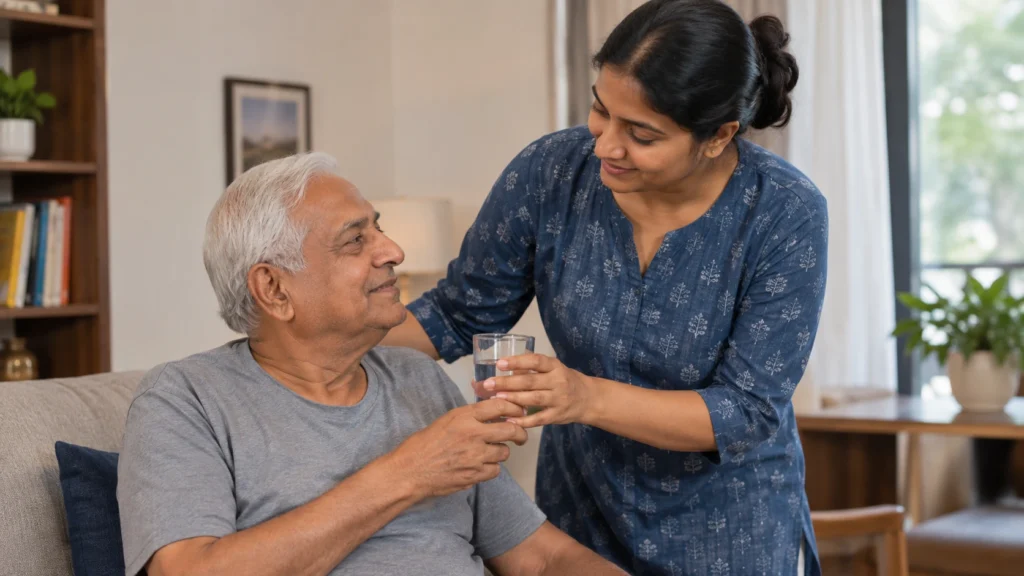
Over 45% of adults above the age of 60+ report difficulty performing everyday activities according to a LASI study. Other studies strongly link limited mobility to falls. Repeated falls further impact physical health and slow recovery, increasing overall risk.
Elders with ADL disability may either need a little help sometimes or complete assistance 24/7. Families who look for assisted living options to solve this problem often get stuck thinking
- Residents lose their independence
- Privacy is compromised
- Life becomes slow, repetitive, or boring
- Environment feels hospital like
These doubts are understandable, especially in India where assisted living is still unfamiliar to many families. But they largely come from not knowing what daily life inside an assisted living facility actually looks like.
Once families understand how services, amenities, and activities are woven into everyday routines, the picture changes.
Services and amenities included in assisted living
On the health and care side:
- assistance with daily activities
- medication management and health monitoring
- access to nursing care and doctors
- physiotherapy, occupational therapy and more
- emergency response and safety systems
On the lifestyle and comfort side:
- regular meals planned around dietary needs
- housekeeping, laundry, and maintenance
- common lounges, gardens, and shared spaces
- transportation support
Beyond essentials, most assisted living communities also focus on engagement:
- group activities, games, and hobby sessions
- yoga or light exercise
- cultural, spiritual, and social programs
In addition facilities typically organise weekly/ monthly/yearly events including
- movie screenings, music evenings, or game nights
- health talks and informational sessions
- group outings and short excursions
- volunteer visits
- celebrations of festivals, birthdays, and national days
Now, let’s have a look at how these services and activities are woven in a resident’s daily schedule in an assisted living facility.
Daily routine in an assisted living
Mornings often revolve around personal routines
- Waking up
- Hygiene
- Medication reminders
- Breakfast
For some residents, this happens independently with light supervision, for others it involves complete assistance.
Mid-day includes
- physiotherapy sessions or gentle exercise
- group activities or quiet time
- social meals where residents dine together
Afternoons are typically flexible, some residents rest, some read, others join optional activities or spend time in common areas.
Evenings usually focus on winding down
- Group walks or gatherings
- light activities, TV or movie screenings
- dinner and medication checks
- assistance with bedtime routines if needed
This schedule does not look the same for a healthy independent adult who needs assistance occasionally and an elder with a chronic or cognitive condition. The level of care required by an elder sets the foundation of daily schedule for a functional and non functional adult.
Daily routine for functional vs non functional resident
For a functional resident (someone who needs little or occasional help):
- mornings may be self-led with reminders rather than assistance
- meals are taken independently
- participation in activities is entirely optional
- health checks are routine rather than frequent
- support stays mostly invisible
For a non-functional resident (due to aging, post-operative recovery, mobility issues, or memory-related conditions):
- mornings involve assisted hygiene and dressing
- medication and vitals may be monitored more closely
- assisted exercises or physiotherapy make fitness routine
- social engagement may happen in smaller or one-on-one settings
- routine checks may shift to daily or continuous monitoring
What changes for a non functional elder is the level and intensity of support, the structure remains the same.
Some trusted and popular providers openly share how they structure daily and monthly life.
Epoch Elder Care publishes activity calendars that include regular movie screenings, group activities, wellness sessions, and planned social interactions spacing engagement across the month rather than packed into a single day.
Antara Senior Care highlights a day-in-the-life approach that blends personal routines, wellness, social interaction, and rest, balancing care with lifestyle.
Summary
When families understand what a day actually looks like, assisted living stops feeling abstract or intimidating.
You see how:
- independence is supported
- privacy is respected within a shared environment
- care blends into daily life instead of dominating it
- engagement prevents isolation without overwhelming residents
Throughout the day, care staff are present in the background supporting when required, stepping back when not.
Assisted living ensures that whatever they can do, they continue to do and whatever they can’t, they’re supported with.